Showing posts with label what works for you. Show all posts

Monday, December 9, 2013

Should You Join?


Staring at the sign, we couldn't believe it.

Two choices were before us.

Either pay $125 for all six of us to enter the museum and take a guided tour, or
pay $120 to gain admittance for the day with the guided tour and become members for an entire year. Our membership would allow us to revisit anytime over the following year and take select guided tours for free. We would also receive two guest tickets with our membership.

My husband looked at me and said flatly, "We'll save $5 just by becoming members."

"But will we use it?" I asked trying to formulate some counter argument, because I just couldn't believe the pricing.

"I don't care if we ever use it. We'll save $5 by getting it today. Then, if we do want to use the membership, we can. It will already be paid for."

His logic prevailed, and we became members for one year. Over that year, we would visit two more times. On the second and final time, we shared our guest tickets with my parents and took a guided tour with them.

For our family, three visits to this museum over the course of one year for less than the cost of one visit was definitely worth the price.

And, honestly, this wasn't the first time we had gotten such a deal.


We've joined an art museum for a year We timed it to see three special exhibits including Rembrandt and Van Gogh exhibits. Not only did we see the special exhibits at no extra cost, we toured the entire museum of three floors and three wings over the course of that year, one wing at a time.

For several years, we were members of a public garden which we visited throughout the changing seasons. Our children became acquainted with numerous plants and trees, discovering how their appearances changed each season. The garden hosted numerous concerts, fireworks, and cultural events which we attended, because they were free for members.

One year we became members of a science museum. Two visits would have paid for the membership, but we timed our membership to overlap three special exhibits we wanted to see. At this particular museum, members received special pricing for these exhibits. Over that year, we saw some of the Dead Sea Scrolls, artifacts from the Titanic, and learned about espionage in addition to touring the regular exhibits.


A Few Benefits of Becoming a Member
  • If used enough times, a membership can more than pay for itself {you must calculate the cost for your individual family}
  • Special discounts or tours are often included in memberships
  • Sometimes, your family can attend off hours or special hours just for members
  • You can plan your visits and see portions of the facility. You won't have to 'see it all' because you can make multiple trips for the same price.
  • Some memberships are eligible for a tax deduction (Please refer to the specifics of your membership.)


If your family is anything like ours, you don't have an endless supply of money. Where and how you choose to spend it are serious considerations. For each membership, we carefully calculated the financial cost. If we deemed a membership worthwhile, we then researched the best time to join. We want our memberships to be as beneficial as possible. From our experience, I have comprised a brief list of how to select memberships.

How to Choose Where and When to Belong
  1. Know your family's interests. If you love paintings, then an art museum may be a great fit for your family, but if you don't it may torture to have to keep visiting an art museum.
  2. Look ahead in your children's academic lessons. Will you be studying Ancient History? A museum of archaeology and anthropology may be a good fit for that year.
  3. Discover museums in your local area which correspond to your family's interests or your children's academic lessons. Be sure to look for places you will want to visit more than once.
  4. Narrow the choices by eliminating those museums which are too far away or too inconvenient. If your family won't, or isn't able to make the trip during the hours the facility is open, then a membership would be foolish. You'll never use it.
  5. Research those museums or places on your shortened listing. What does each place cost for membership? What are the specific benefits members receive that one-time visitors don't? What is the upcoming exhibit or future show schedule? Is there anything on the calendar which you would want to see or do? Will these visits and events fit into your family calendar? Can you time the membership to view or participate in all the upcoming events you would like to see or do?
  6. Do the math!* I cannot stress this one enough. It still may not be cost effective to join. Perhaps you can visit the museum on a free day, or take advantage of a coupon offer. Sometimes a better deal is available, and a membership is not necessary.
  7. Eliminate the choices which don't work well for your family, and pursue those which do on your own timetable.
*When considering the cost of visiting, include the cost of travel, tolls, parking, and food. Also, if you will want some type of souvenir, include this into your cost as well.


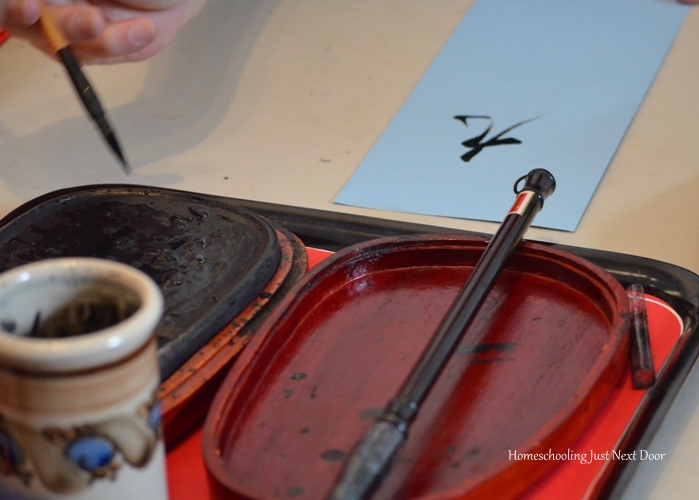
All the photographs featured in this post originally appeared on my personal blog. They highlight a visit to a special event at our local art member. We were privileged to attend for free, not because we were members, but because the event and the museum were free to the community that day. It really does pay to research and calculate the costs.


-------------------------------------------------

Dorie and her drummer husband, Jerry, began their homeschooling journey over ten years ago. Currently, they home educate four children ranging from early elementary to high school. Dorie can be found at Homeschooling Just Next Door, Facebook, or Pinterest.


Wednesday, October 23, 2013

Did I Underestimate Her?

Charlotte celebrated her third birthday a few weeks ago.  One of the gifts she received was a 48 piece Minnie Mouse floor puzzle.  When I saw it, I almost laughed.  I told my husband that it would be a long time before Charlotte was ready for that puzzle.  She had been working on 12-15 piece puzzles. Occasionally, she put together a 24-piece puzzle.  But, 48 pieces is twice that much.  I was sure that Charlotte was not ready for such a big challenge.

However, Charlotte REALLY wanted to try putting together the puzzle and I could not dissuade her from trying.  So, I pulled it out of the closet and let her try.  I sat next to her while she worked, thinking that she was going to need a LOT of help from me.  But, to my surprise, I was wrong.  Charlotte worked diligently for about an hour and a half and this was the result:

Yes, she put the entire 48-piece puzzle together all by herself!  And, she has done it several times since.  I am so proud of her.  


But, I am also a little disappointed in myself and my teaching.  I keep thinking that I have been working so hard to ensure her success and have forgotten the importance of challenging her.  

Charlotte has such an inquiring mind and she is so eager to learn.  She LOVES a challenge and is very persistent at her work when I give her something difficult to complete.  

Back when I was a teacher, I learned that most young children have those qualities, at least until they are trained that failure is not ok.  Then, they stop liking challenges because they are afraid of failure.  I don't want that to happen to my children.  I want them to always love learning and seek out new challenges that will help them grow as people.  So, I am working hard to not underestimate my children's skills.  I am making a conscious effort to challenge them both daily and providing them a safe environment and support when they fail.  

It breaks my heart a little when they don't succeed, but I am quickly seeing that it bothers me more than it bothers them.  And, every day, it is obvious to me that they are looking forward to the challenges ahead of them.  And, that makes me smile!

Marla is a former special education teacher and homeschooling mom of two little girls (ages 3 and 5) and is expecting #3 soon.  She has her PhD in Special Education and loves to put her knowledge to use teaching her children and sharing learning/teaching ideas.  She blogs about raising and teaching her children at Marla's Motherhood Musings and her family's experiences living in Zambia at Our Life in Lusaka.

Tuesday, May 7, 2013

Top 3 Benefits of "Partial Homeschooling"

Last week, I shared about my family's decision to become "partial homeschoolers".  Our daughter attends Pre-K every morning and I teach her in the afternoons.  Today, I would like to share what we love most about partial homeschooling.

1. Our daughter's learning potential is up to us and to her.  Because academic instruction is done at home, we can work at her pace.  Abigail has learned so much this year from her lessons with me and the instruction she receives at school reinforces much of what she has learned.

2. Our daughter's social skills have greatly improved.  Being in school with her peers every day has given Abigail the opportunity to make friends and learn to handle conflicts with others.  Being in school has helped her learn to navigate friendships and social relationships.

3. Our youngest child gets 1:1 learning time with me.  While Abigail is in school, I spend time one-on-one with Charlotte.  She gets to learn academic and life skills during our time together each day.  Abigail being in school has helped Charlotte's learning.  In addition, having time away from Abigail has given Charlotte the chance to develop her own identity as a separate person.

Do you partial homeschool?  What do you like best?  

Join me next week as I share the biggest drawbacks of partial homeschooling.


Marla is a former special education teacher, university instructor, and stay-at-home mom of two little girls (ages 2 and 4).  She blogs about raising and teaching her children at Marla's Motherhood Musings and her family's experiences living in Zambia at Our Life in Lusaka.

Friday, May 3, 2013

Gearing Up to Start Year-Round Schooling


Today, we are very excited to welcome a guest post by Stephanie from Where He Leads, We Follow!


During our very first year of schooling we started in early July.  I thought it would be great to start early and have time off as needed and an extended Christmas holiday.  It was nice!  We got all of our days required in by the end of April and we were able to relax.  I decided that next year would be different.  We would start school later in the year and go along with the public school calendar.  So, we started in early August and followed the national holidays and breaks that the public school system does.  It left the kiddos and myself feeling more burnt out than ever and needing a major break.  We didn't do much in the way of schooling through March and are back at the grind here in April.  That made me stop and evaluate what we should change - because honestly something had to change.
I prayed.  Boy have I been praying!  Asking God to reveal to my heart what it is that we should change in order to keep us all from feeling the burn out at the middle of our next school year.
I talked to my hubby. I love that man!  He keeps me grounded when my feet want to leave the floor.  He tells me when my ideas are crazy or when I need to push forward.
I talked with the kiddos.  Honestly those two were no help!  HA!  They could care less that mom is burnt out.  They are just ready to be done with the school day so they can go outside to play.
So that leads me to taking with you today.  Today I am planning.  I am planning our very first year-round school year.  Wanna know what my thoughts are?  Good!  I thought you did.  ;)
First of all we are going to be taking a 4 week break from mid May through mid June.  That way we can rest and recharge and mom can get things in order.
While we are on our break I am going to be gathering all of our necessary materials for our next school year.  I already know the curriculum we are using and have the bulk of it purchased.  I just have to buy the odds and ends.
Then I will work on our schedule.  We are required 180 days of school (who are we kidding we all know kids learn 365 days a year!) so I am going to figure out when we can/should take breaks and chunk up our curriculum to fit within those days.  I will also have to take our co-op classes into account since we are planning to join a new co-op next year.
After that is done we get to start back fresh and new!!  We will have some workbooks, mainly handwriting  that we will have to carry over to the new school year but that is fine by me.  
We are all looking forward to our new school year and are excited to see what greatness it holds for our family.
What does your school calendar look like?


Stephanie is homeschooling mama of 2 and wife to the man of her dreams.  She has been creating graphics for her web-based business for three years.  While homeschooling was never a dream she dreamed for herself she is thankful that God placed it upon her heart.  Find her homeschool blog, Where He Leads, We Follow, here: http://www.whereheleads-wefollow.com and her design website, Tatorbug Creations, here: http://www.tatorbugcreations.com

Wednesday, May 1, 2013

Why I Still Consider Myself a Homeschooler

Last fall, I wrote about my family's decision to send our oldest daughter (age 4) to prekindergarten.  When we moved overseas, our family situation changed and the move had significant social implications for our children.  Making the decision to send Abigail to school for socialization was very difficult for us and we are constantly reevaluating our choice.  

Since Abigail started school, I have questioned my participation as a writer for this blog and have wondered if I am still a homeschooler.  

Abigail attends school five mornings a week and I pick her up at lunchtime.  After lunch, we spend about 2 hours doing lessons that I have created before we attend afternoon activities (ballet, piano, gymnastics, swimming, playgroups). 

Now that the school year is coming to a close, I have finally figured out that we are still homeschoolers.  Yes, my homeschool set-up looks different than most.  

However, my husband and I still believe that we are responsible for the education of our children.  We ensure that, every day, both of our girls receive learning (academic, religious, and social) that meets their needs.  We teach some lessons and we allow others to teach some lessons.  But, when it comes down to it, we take ultimate responsibility for the education of our girls.  And, I have come to believe that choosing to be responsible for your child's education and teaching as necessary is what makes one a homeschooling parent.  

What are your thoughts?


Marla is a former special education teacher, current PhD student, university instructor, and stay-at-home mom of two little girls (ages 2 and 4).  She blogs about raising and teaching her children at Marla's Motherhood Musings and her family's experiences living in Zambia at Our Life in Lusaka.

Tuesday, January 8, 2013

Tuesdays in 2013: Charlotte Mason at Our House!

In 2013, I, Maureen, will be your Tuesday hostess.  I will be sharing with you how I use the Charlotte Mason philosophy and method in my home with my children, aged 9, 6, 3, and 5 months.  I hope that you will learn something new, find something to share, and maybe be inspired to see your children in new ways.


If you've always been curious about the Charlotte Mason method, but you've been too confused or overwhelmed to 'go there', I think you'll find some little jewels for meditation here!

Charlotte Mason was a British educator in the 19th century who developed a system of education for governesses and mothers to use with their children.  It was also used in day schools, or cottage schools, for the working poor.  Relying heavily on the experience of the natural world and fine literature, Charlotte Mason’s philosophy was a revolution of gentleness in a harsh and dry educational climate.  She favored mothers keeping their children at home and not pushing early academics. 


There are many fine books on Charlotte Mason available on Amazon or at your local library.  Please see the reading list at the end of this post.

Charlotte Mason learning is unique.  It is not school-at-home.  The mainstays of a Charlotte Mason education are living books, narration, and short lessons.  Beyond that, there is a lot of variation in how modern home educators adapt the Charlotte Mason philosophy for their own use. 

So, what is a living book?  To begin, a living book is a book written by an individual.  In other words, NOT a textbook.  In edu-speak, that means a living book is a ‘primary source.’  It’s the difference between reading about  The Iliad, versus reading The Iliad.  Workbooks might be available over various subjects, but not required.  I will be sharing with you my family’s favorite living books for various subjects, focusing on some hidden gems I’ve never seen on other homeschool reading lists.  And believe me, I read lots of book lists!

Narration is another important concept in Charlotte Mason education.  And while I consider narration very important, I have never found the method Charlotte Mason originally used to adapt well to my real, modern family.  Nor have I found other modern CM homeschoolers’ methods to work very well.  So I have developed my own form of narration that I call ‘natural narration’ which I will be sharing in a series of posts this spring.

An while short lessons might seem self-explanatory, it can be tricky to apply the concept of short lessons with different children and with different curricula or books.  So I’ll be sharing some creative ways to break up tasks and exercises, especially for boys.      

Other Charlotte Mason topics on which I’ll be extrapolating include ideas for living math, nature study for the lazy mother, art and picture study for the lazy mother, and a Renaissance education on a shoestring.  Please do leave a comment if there is a topic you’re burning to hear about.  I am NOT a Charlotte Mason expert!  But I love Charlotte Mason and I love to see mothers discover how incorporating some CM ideas into their homeschool can make the days- not to mention the subject matter!- more enjoyable, less tedious, and *frankly* easier all around!!!

"Education is an atmosphere, a discipline, a life."
-Charlotte Mason

I hope you’ll join me on Tuesdays in 2013 here at Growing Your Homeschool!  Here are some quick reads to give you more background on Charlotte Mason and the Charlotte Mason method:
For the Children's Sake: Foundations of Education for Home and School  (By far the easiest to read, most inspiring CM book ever written.  In my humble opinion, obviously!)

Charlotte Mason's Original Homeschooling Series (May be a bit heavy reading, but this is the *original* CM 6 book series, by Charlotte herself!)

Charlotte Mason Study Guide  (Out of print, too bad, because this book is great, but definitely available through interlibrary loan.)

Monday, December 17, 2012

Making Mid-Year Adjustments


In two weeks, we'll usher in a new year.
With bells, whistles, toasts, and well wishes another year will start.
The new year promises much to many:
a new start
a chance to do things better
a fresh year

But, it isn't really a new school year for most of us. The majority of us will be about half-way through our school year when 2013 begins. However, just because you are half way through a school year, it doesn't mean you can't make any changes or make things better. It doesn't mean you can't have a fresh start in your homeschool.

In the following two weeks, evaluate your school year.
How is it going? Be honest.

Are you and your children in a comfortable routine?
Do they still have an excitement for learning?
Are your children challenged, but progressing well?
- or -
Have the days become laborious?
Is there more stress and strain than joy?
Is your schedule cramped, allowing no time for hobbies or free time?

Aren't sure? Ask your children. They will give you valuable feed back.

Perhaps your days are a combination of good and bad.
Some variation is normal. On the other hand, if you find your school year is slowly (or quickly) crumbling into a monotony of strain with no joy, then might I suggest you make a change?


Find out what is wrong.
Do you need to change your curriculum, approach, or method?
Do you simply need to slow down and find a better rhythm for your days?
Do you just need this Christmas break to refuel and refresh yourselves?

Make a change.
Take that needed break.
Alter your schedule or lesson plans.
Chose a new curriculum, approach or method.


Whether you need to make any changes or not, a mid-year review is always beneficial. After all, how will you know if your homeschool needs adjustments or not, if you don't evaluate it from time to time? A mid-year break offers an ideal time to evaluate and make adjustments.

Friday, December 7, 2012

Seeds of Wisdom - Homeschooling During the Christmas Season


It is no doubt, Christmas can be a very busy season. With decorating, baking, shopping, visiting, and parties, just how do you ensure you get 'everything,' including homeschooling, done?


Aurie ~ We have a light school schedule during December on purpose. We are using the Nativity Story as a basis for homeschool and building around that. We'll bake cookies as part of school, and plan field trips for light displays, angel tree gifts and Sesame Place during our regular school days. Our goal this season is to savor the moments instead of rushing from one thing to the next.

Marla ~ We do "fun school" in December and mostly do Bible lessons and art projects. I also consider helping me with Christmas shopping and making homemade gifts as "schooling" for my girls.

Beth ~ I am like the other girls, and everything we do will be related to Christmas and making the celebration one to remember. We will incorporate activities such as Christmas recipes into our homeschool. Books, movies, and music included in homeschool will be related to Christmas. The Nativity is set up for the kids to play with. Education is always taking place, even if "scheduled" learning is not.


Do you have any tips for homeschooling during the Christmas season? We'd love to hear them.


Tuesday, November 27, 2012

Working and Homeschooling

I am one of thus lucky moms who found jobs working part-time from home so that I can still be here for my children every single day.  I am completing the work for my doctorate in Special Education, writing curriculum for a NGO here in Zambia, teaching a course at the local university (which does actually require me to leave the house for a few hours each week), and writing articles for education journals with some colleagues back in the US.  In total, I work about 25-30 hours a week.  I am still learning how to make it all work for my family, but I have found a few tips that I would like to share:

1. Plan your day. Schedule in time for homeschooling, housework/cooking, and working.  Then, stick to the schedule (as much as dirty diapers and children refusing naps will allow).  To account for the unpredictable, plan in more work time than you actually need.

2. Do some of your work while your children are doing independent work activities.  Then, you can all work together.  It can be beneficial for children to see that grown-ups have to sit down and work too.

3. Be willing to work nights and weekends if necessary sometimes.  I am lucky that my girls go to bed very early (about 7 pm) and I work for a few hours each evening and often work several hours on the weekends.  I consider my jobs (which I LOVE) as my "free time activities".

4. Be honest with yourself and say "no" when necessary.  There are countless cool projects that I have turned down so that I can focus on what is most important - my family.  It can be hard to know your limits, but trying to do too much will be harmful to you, your family, and your employer.

5. Reevaluate the decision to work and your job on a regular basis.  If working and homeschooling is not working for you, change what you are doing!

While I am still figuring things out, these tips have worked for me.  Do any of you have other tips for working from home?


Marla is a former special education teacher and current PhD student and stay-at-home, homeschooling mom of two little girls (ages 2 and 4).  She blogs about homeschooling at Marla's Motherhood Musings and her family's experiences living in Zambia at Our Life in Lusaka.

Monday, November 19, 2012

Growing Independent Learners


In parenting, it seems like you almost immediately begin working yourself out of a job.
First there is potty training, independent eating, and simple chores.  Then, soon enough, your child is bathing on his own, making sandwiches, and completing helpful tasks around the house.  Each of these successfully learned lessons leads to increased responsibility and independence for your child. 

It is the goal.  Each child needs to become responsible and independent of you, because eventually your child will be launched into adulthood.

The same can be said of homeschooling.

From the first few months of homeschooling onward, you are working yourself out of a job. 
  • Teaching a child to read and comprehend leads to individual pursuits of books and processing of ideas.
  • Teaching a child to add and subtract leads to life skills necessary for budgeting, handling money, and business.
  • Teaching a child how to write letters and words leads to creating reports, resumes, business letters, and essays.

So, why, when it comes to homeschooling, do many of us cringe at the idea of giving our children more responsibility for their own education?  Is it the regulations which clearly outline what has to be done and sometimes when?  Is it our own educational backgrounds which deemed the teacher responsible until graduation?  Is it fear of failure on our child's part?


Moving Children Toward Independent Learning


Teacher Led or Directed Learning -  In the very early stages of education, all learning is teacher led or directed.  You provide the lessons, materials, time, or experiences for your child to learn.  Maybe your child has some say over when he does math, or which books you read to him, but ultimately, you are still in charge of all his learning.  Lower elementary grades are filled with a lot of this type of learning. 

Teacher Facilitated Learning - After the child matures and learns to read, the teacher's role, while still important, lessens slightly.  The child is now able to read and understand increasingly harder works.  However, the child still needs you to facilitate his path.  You are still in charge of all his learning, but he is beginning to work on some of it by himself.  Maybe he reads a few of his lessons on his own and you help him through the troublesome areas.  You, his teacher, are facilitating his lessons, making sure he remains on task, and helping him progress.  Typically, the upper elementary grades are when a child starts to slowly take more responsibility for his own learning.

Student Led and Teacher Supported Learning - Once the student is able to begin directing his own learning, he should start.  He will still need guidance and accountability.  There will still be times when he has questions and needs taught.  You are not giving up your role as teacher.  You are simply allowing him to navigate through his lessons with your support.  Middle school is a perfect time to start transferring responsibility to your child.  Perhaps your child will begin using a syllabus for a course.  He begins to check his own listing daily, instead of relying on you to lay out his work.  Maybe he will transfer to weekly assignments where he must decide what is done on a specific day to meet these weekly deadlines.  Maybe instead of walking him through every step of a research paper, you simply assign the paper with a due date.  There are many different ways your child can begin to take the lead in his own learning.  However, your role is still vital.  You will need to hold him accountable, and when necessary help him get back on track. 

Independent Student - Eventually, this is the goal for all individuals.  An independent student is able to look over an assignment or course, break it down into smaller tasks, schedule the tasks, and complete them.  He can study for a test on his own.  He can research the answers to his own questions, checking various sources, navigating through propaganda, and discerning author's intentions and motives.  He can analyze statistics and studies, recognize when a publication is simply promoting an agenda, and realize which sources are dependable.


These stages of independent learning can be progressed through at different paces depending on the student, style of learning, method of homeschooling, etc.  Regardless of when or how your child becomes an independent student, who is able to learn on their own, it should be the goal of every homeschooling parent.  Someday, they will no longer be in your school.  Someday, they will need to teach themselves.  Helping them learn to become independent students now, while in your homeschool, will help them greatly.

Thursday, October 25, 2012

Work with What You Have, Because What You Have, Works

Even before I started homeschooling, and especially after I started, I had a dream.  The dream was a house... with an eat-in kitchen... and a playroom/ schoolroom off that eat-in kitchen... all separated from the 'formal' living area....

And the walls would be lined with IKEA Trofast shelving... and book displays... and a door would lead from this wondrous room into the back yard, per Maria Montessori's recommendation.... 

I didn't feel sorry for myself (most days), just a little frustrated, by the materials stuck here and there, but never where I needed them, when I wanted them.  Aggravated by the sticky door on my jumbled supply closet.  Piqued by our meticulously de-cluttered toy collection that never got picked up, despite its manageable size and scope.  And I dreamed of that room... wood floors, hopefully... a fireplace even?

Well, ladies and gentlemoms, here it is:

this year I got that room.

Oh, I paid for it I think, with a stressful move during a wicked-hot drought, a messy third trimester with a messier house... and the room doesn't have any windows except that door into the backyard (forgot to add windows into the dream...).

And add to that, my  husband had to go to Minneapolis on business a few weeks ago, and guess what?  Trofast shelves hitchhiked home in his trunk.  And guess what else?  Ruined carpet meant ripping out the carpet and laying wood down (well, actually faux wood plank tiles, but good enough for me).

So go on, ask me- is it heaven?  Has our homeschool achieved new heights; has the play in this hallowed space been more soulful, more perfect?  Has my dream layout brought true happiness?

O friends, you know the answer by now, don't you?  You do.

It's just a room.  Right now, those wood planks are covered with toys and the art table looks like Picasso's studio recently vomited all over, spilling down onto the floor.  And several projects are still in progress on my dining table.  The more school-ish math and phonics books still sit in a stack on my bookcase in the living room because hey, I like to nurse where it's quiet and little people apparently like to do math where it's quiet, too. 

Last week, I'll admit, I felt a little let down.  All my great ideas weren't magic.  Things work just like they always have, and frankly, it robs the sweetness of achieving my dream set-up.  My books are organized, well, a little bit- but I still have to use them. 

What I used to have- rubbermaid totes for sorting the toys, stacks of books here and there, art supplies stuffed in the dining room cabinet- worked for us just fine.  And what I've designed and done in our new home works, too.  But it's US who work, really, isn't it- myself and my little people!  Not the storage furniture.  And by the way, IKEA Trofast shelves do look nice, but someone still has to put the toys away in them....

Do you ever do this?  Dream of how you wish you had more space, better shelves, enough baskets for all the toys, an organized supply closet, and so on and so forth?  Are you waiting to carve out that art nook/ reading nook/ nature table till you move to a bigger house/ declutter/ organize your supplies/ have a weekend to yourself?

I wouldn't.  Because it's pretty rare and pretty miraculous for some dreams to come true.  I know I never really expected to have my daydream come true.  That's why I always forced myself to make an art nook when there wasn't really room for one.  And now I realize that the real secret is:

Work with what you have, because what you have, works.

Waiting for the fish to bite or waiting for wind to fly a kite.  Or waiting around for Friday night or waiting perhaps for their Uncle Jake or a pot to boil or a better break or a string of pearls or a pair of pants or a wig with curls or another chance.  Everyone is just waiting.  ~Dr. Seuss


Enjoy yourself.  It's later than you think.  ~Chinese Proverb
As you grow older, you'll find the only things you regret are the things you didn't do.  ~Zachary Scott
For a long time it had seemed to me that life was about to begin - real life.  But there was always some obstacle in the way.  Something to be got through first, some unfinished business, time still to be served, a debt to be paid.  Then life would begin.  At last it dawned on me that these obstacles were my life.  ~Fr. Alfred D'Souza
Related Posts Plugin for WordPress, Blogger...