Showing posts with label Individualization. Show all posts

Monday, December 9, 2013

Should You Join?


Staring at the sign, we couldn't believe it.

Two choices were before us.

Either pay $125 for all six of us to enter the museum and take a guided tour, or
pay $120 to gain admittance for the day with the guided tour and become members for an entire year. Our membership would allow us to revisit anytime over the following year and take select guided tours for free. We would also receive two guest tickets with our membership.

My husband looked at me and said flatly, "We'll save $5 just by becoming members."

"But will we use it?" I asked trying to formulate some counter argument, because I just couldn't believe the pricing.

"I don't care if we ever use it. We'll save $5 by getting it today. Then, if we do want to use the membership, we can. It will already be paid for."

His logic prevailed, and we became members for one year. Over that year, we would visit two more times. On the second and final time, we shared our guest tickets with my parents and took a guided tour with them.

For our family, three visits to this museum over the course of one year for less than the cost of one visit was definitely worth the price.

And, honestly, this wasn't the first time we had gotten such a deal.


We've joined an art museum for a year We timed it to see three special exhibits including Rembrandt and Van Gogh exhibits. Not only did we see the special exhibits at no extra cost, we toured the entire museum of three floors and three wings over the course of that year, one wing at a time.

For several years, we were members of a public garden which we visited throughout the changing seasons. Our children became acquainted with numerous plants and trees, discovering how their appearances changed each season. The garden hosted numerous concerts, fireworks, and cultural events which we attended, because they were free for members.

One year we became members of a science museum. Two visits would have paid for the membership, but we timed our membership to overlap three special exhibits we wanted to see. At this particular museum, members received special pricing for these exhibits. Over that year, we saw some of the Dead Sea Scrolls, artifacts from the Titanic, and learned about espionage in addition to touring the regular exhibits.


A Few Benefits of Becoming a Member
  • If used enough times, a membership can more than pay for itself {you must calculate the cost for your individual family}
  • Special discounts or tours are often included in memberships
  • Sometimes, your family can attend off hours or special hours just for members
  • You can plan your visits and see portions of the facility. You won't have to 'see it all' because you can make multiple trips for the same price.
  • Some memberships are eligible for a tax deduction (Please refer to the specifics of your membership.)


If your family is anything like ours, you don't have an endless supply of money. Where and how you choose to spend it are serious considerations. For each membership, we carefully calculated the financial cost. If we deemed a membership worthwhile, we then researched the best time to join. We want our memberships to be as beneficial as possible. From our experience, I have comprised a brief list of how to select memberships.

How to Choose Where and When to Belong
  1. Know your family's interests. If you love paintings, then an art museum may be a great fit for your family, but if you don't it may torture to have to keep visiting an art museum.
  2. Look ahead in your children's academic lessons. Will you be studying Ancient History? A museum of archaeology and anthropology may be a good fit for that year.
  3. Discover museums in your local area which correspond to your family's interests or your children's academic lessons. Be sure to look for places you will want to visit more than once.
  4. Narrow the choices by eliminating those museums which are too far away or too inconvenient. If your family won't, or isn't able to make the trip during the hours the facility is open, then a membership would be foolish. You'll never use it.
  5. Research those museums or places on your shortened listing. What does each place cost for membership? What are the specific benefits members receive that one-time visitors don't? What is the upcoming exhibit or future show schedule? Is there anything on the calendar which you would want to see or do? Will these visits and events fit into your family calendar? Can you time the membership to view or participate in all the upcoming events you would like to see or do?
  6. Do the math!* I cannot stress this one enough. It still may not be cost effective to join. Perhaps you can visit the museum on a free day, or take advantage of a coupon offer. Sometimes a better deal is available, and a membership is not necessary.
  7. Eliminate the choices which don't work well for your family, and pursue those which do on your own timetable.
*When considering the cost of visiting, include the cost of travel, tolls, parking, and food. Also, if you will want some type of souvenir, include this into your cost as well.


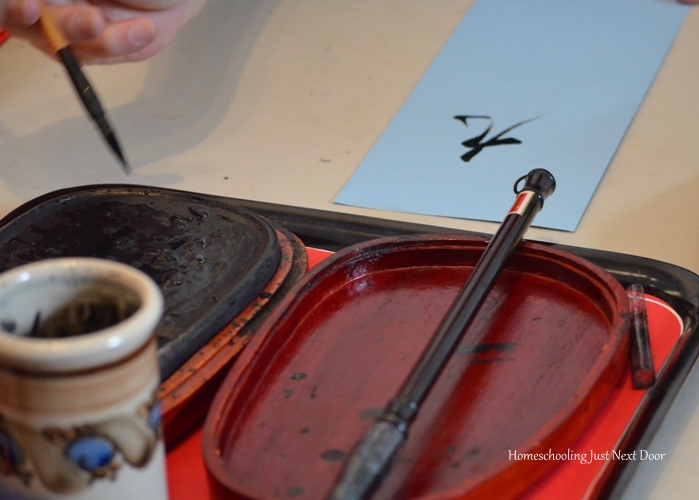
All the photographs featured in this post originally appeared on my personal blog. They highlight a visit to a special event at our local art member. We were privileged to attend for free, not because we were members, but because the event and the museum were free to the community that day. It really does pay to research and calculate the costs.


-------------------------------------------------

Dorie and her drummer husband, Jerry, began their homeschooling journey over ten years ago. Currently, they home educate four children ranging from early elementary to high school. Dorie can be found at Homeschooling Just Next Door, Facebook, or Pinterest.


Monday, November 18, 2013

Creating a Unit Study


There are plenty available. Just do a quick search and you are bound to find more than one unit study for the very next topic in your lesson plan. Some will cost you. Some are free.

One of them may just be perfect for you and your family. The topic, lessons, and activities are spot on. It couldn't get any better. After all, the work is done for you. You just have to implement it.

But what about those of us who actually want to plan our own? Maybe customize it completely? How do you plan a unit study?

Today, I'll walk you through a few quick steps to planning your own unit study. These steps will work for almost any unit study, whether it be a multi-subject unit study or a simple history unit.

How to Plan a Unit Study
  1. Pick a topic. Perhaps you'd like to study a time period in history, a specific culture, or science topic. Maybe you would like to build a unit study around a book you will be reading with your children.
  2. Find one main reference book, resource, or website. This resource will serve as a guide or starting point, depending how you choose to use it. Generally, if you want to build a unit study based on a piece of literature, this becomes your reference book.
  3. Create a list of subtopics. Good reference resources can be used to glean subtopics or areas of further study within one main topic. Some can be used as spines for the entire study. Usborne, DK, and other books like them lend themselves well to this usage. Their typical one topic per two page layout easily creates an outline for more in depth study. Unit studies based on literature, might use elements from the plot, characters, setting, and author. For instance, a unit study on Charlotte's Web could include subtopics like farm life, barns, spiders, farm animals, rats, and fairs.
  4. Collect {or create your own} ideas. Find books, projects, activities, and worksheets for each of the subtopics. Be sure to include ideas below, at, and above grade level. Generally, anything can be altered a little, and sometimes you may want an activity to serve as a review or a challenge for your child. In the past, before Pinterest, I used to collect all my ideas in a file. Now, I simply pin the idea onto a board.
  5. Find field trips. List local places and events which could relate to one or more of the subtopics. Check into virtual tours as well. Sometimes it may not be possible to visit a place, but students can 'tour' it through a website.
  6. Outline the order of study. It may seem backwards to place this step so far down the list. However, once you have the details collected, then you can decide which of the subtopics you'll likely spend more time covering or which are more important in the unit study.
  7. Assign a schedule for the unit study. Judging by the ideas you have found or created, you can decide how much time to allow each one. Be sure to keep it flexible and include a few extra days for topics of interest. Children often want to explore a specific topic further. Allow them the freedom to do so, by setting aside extra time.

If you are creating a unit study which is cross curricula, then you will need to pay careful attention to include subtopics, activities, and field trips which are indeed cross curricula. Balance your unit study by finding or creating lessons which include all the areas of study you want to cover.


-------------------------------------------------


Dorie and her drummer husband, Jerry, began the homeschooling journey over ten years ago. Currently, they home educate four children ranging from early elementary to high school. Dorie can be found at Homeschooling Just Next Door, Facebook, or Pinterest.


Wednesday, October 9, 2013

Do I Have to Stick to the Curriculum?

Recently, I had a conversation with a friend who is a new homeschooler.  Due to being new at homeschooling and not having a teaching background, she has chosen to use a boxed curriculum this year (which I think was a fantastic choice for her and for many people, so please don't think that I am criticizing curriculums).  

My friend expressed to me her concern that getting her daughter to do the reading work included in the curriculum was a huge challenge every day.  Each day, her daughter asks her if she can read some early readers they have on the shelf instead.  My friend had been saying "no" because she believed she must follow the curriculum, but she wanted advice on what to do.  

My response was to ask her what her reading goals are for her daughter.  As I expected, her goals are for her daughter to become a proficient reader and to enjoy reading.  So, my response was "who cares what she is reading as long as she is reading?  If the early readers on your shelf are more interesting to her than the curriculum reading passages, have her read those instead (or do a combination of both)."

In my house, I have 4 sets of early readers and a Dick and Jane bound collection.  Before the school year started, I had carefully chosen which books we were going to read and in what order.  I had even made worksheets and writing prompts to go with each story.  However, Abigail (kindergarten) quickly changed those plans when she begged for me to purchase some early readers she saw at the local book store and wanted to read Dick and Jane (which I had not planned for).  Now, I give her options for her main readings each week.  I choose two or three little books or Dick and Jane stories that are at her reading level and let her choose which one she prefers.  Reading is often her favorite part of our school day and she has is making very fast progress in her reading skills.

While having a curriculum is wonderful, we, as the teachers of our children, should not feel bound by them.  We have the freedom to change the curriculum, add to it, delete parts, or completely change the curriculums we are using.  Our curriculums should be a guide for our teaching, but not our teaching bibles!


Marla is a former special education teacher and homeschooling mom of two little girls (ages 3 and 5).  She has her PhD in Special Education and loves to put her knowledge to use teaching her children and sharing learning/teaching ideas.  She blogs about raising and teaching her children at Marla's Motherhood Musings and her family's experiences living in Zambia at Our Life in Lusaka.

Wednesday, April 17, 2013

Interest-Based Learning

One of my favorite things about homeschooling is that I can individualize the learning to meet the needs and interests of my children.  We don't have to follow a set curriculum; we can create our own.

A few weeks ago, we saw a chameleon outside of our house.  We stopped what we were doing (independent work) and spent about 30 minutes observing it, but I think that Abigail and Charlotte could have spent all day looking at it!


While the girls were completing their independent work, I did a quick internet search and created a short lesson about chameleons that we were able to complete later in the day.  (Thank goodness for google, iBooks and fabulous bloggers - I found a video, 3 worksheets, and 2 books in less than 15 minutes!)

The girls loved learning more about something that they had actually witnessed.  The lesson was certainly more meaningful than it would have been if they had not seen a chameleon that morning.  And learning about the world around them makes them more excited for learning and always wanting to learn more.

I am so thankful for the ability to use interest-based learning in our homeschooling!


Marla is a former special education teacher, current PhD student, university instructor, and stay-at-home, homeschooling mom of two little girls (ages 2 and 4).  She blogs about homeschooling at Marla's Motherhood Musings and her family's experiences living in Zambia at Our Life in Lusaka.

Monday, December 17, 2012

Making Mid-Year Adjustments


In two weeks, we'll usher in a new year.
With bells, whistles, toasts, and well wishes another year will start.
The new year promises much to many:
a new start
a chance to do things better
a fresh year

But, it isn't really a new school year for most of us. The majority of us will be about half-way through our school year when 2013 begins. However, just because you are half way through a school year, it doesn't mean you can't make any changes or make things better. It doesn't mean you can't have a fresh start in your homeschool.

In the following two weeks, evaluate your school year.
How is it going? Be honest.

Are you and your children in a comfortable routine?
Do they still have an excitement for learning?
Are your children challenged, but progressing well?
- or -
Have the days become laborious?
Is there more stress and strain than joy?
Is your schedule cramped, allowing no time for hobbies or free time?

Aren't sure? Ask your children. They will give you valuable feed back.

Perhaps your days are a combination of good and bad.
Some variation is normal. On the other hand, if you find your school year is slowly (or quickly) crumbling into a monotony of strain with no joy, then might I suggest you make a change?


Find out what is wrong.
Do you need to change your curriculum, approach, or method?
Do you simply need to slow down and find a better rhythm for your days?
Do you just need this Christmas break to refuel and refresh yourselves?

Make a change.
Take that needed break.
Alter your schedule or lesson plans.
Chose a new curriculum, approach or method.


Whether you need to make any changes or not, a mid-year review is always beneficial. After all, how will you know if your homeschool needs adjustments or not, if you don't evaluate it from time to time? A mid-year break offers an ideal time to evaluate and make adjustments.

Monday, November 19, 2012

Growing Independent Learners


In parenting, it seems like you almost immediately begin working yourself out of a job.
First there is potty training, independent eating, and simple chores.  Then, soon enough, your child is bathing on his own, making sandwiches, and completing helpful tasks around the house.  Each of these successfully learned lessons leads to increased responsibility and independence for your child. 

It is the goal.  Each child needs to become responsible and independent of you, because eventually your child will be launched into adulthood.

The same can be said of homeschooling.

From the first few months of homeschooling onward, you are working yourself out of a job. 
  • Teaching a child to read and comprehend leads to individual pursuits of books and processing of ideas.
  • Teaching a child to add and subtract leads to life skills necessary for budgeting, handling money, and business.
  • Teaching a child how to write letters and words leads to creating reports, resumes, business letters, and essays.

So, why, when it comes to homeschooling, do many of us cringe at the idea of giving our children more responsibility for their own education?  Is it the regulations which clearly outline what has to be done and sometimes when?  Is it our own educational backgrounds which deemed the teacher responsible until graduation?  Is it fear of failure on our child's part?


Moving Children Toward Independent Learning


Teacher Led or Directed Learning -  In the very early stages of education, all learning is teacher led or directed.  You provide the lessons, materials, time, or experiences for your child to learn.  Maybe your child has some say over when he does math, or which books you read to him, but ultimately, you are still in charge of all his learning.  Lower elementary grades are filled with a lot of this type of learning. 

Teacher Facilitated Learning - After the child matures and learns to read, the teacher's role, while still important, lessens slightly.  The child is now able to read and understand increasingly harder works.  However, the child still needs you to facilitate his path.  You are still in charge of all his learning, but he is beginning to work on some of it by himself.  Maybe he reads a few of his lessons on his own and you help him through the troublesome areas.  You, his teacher, are facilitating his lessons, making sure he remains on task, and helping him progress.  Typically, the upper elementary grades are when a child starts to slowly take more responsibility for his own learning.

Student Led and Teacher Supported Learning - Once the student is able to begin directing his own learning, he should start.  He will still need guidance and accountability.  There will still be times when he has questions and needs taught.  You are not giving up your role as teacher.  You are simply allowing him to navigate through his lessons with your support.  Middle school is a perfect time to start transferring responsibility to your child.  Perhaps your child will begin using a syllabus for a course.  He begins to check his own listing daily, instead of relying on you to lay out his work.  Maybe he will transfer to weekly assignments where he must decide what is done on a specific day to meet these weekly deadlines.  Maybe instead of walking him through every step of a research paper, you simply assign the paper with a due date.  There are many different ways your child can begin to take the lead in his own learning.  However, your role is still vital.  You will need to hold him accountable, and when necessary help him get back on track. 

Independent Student - Eventually, this is the goal for all individuals.  An independent student is able to look over an assignment or course, break it down into smaller tasks, schedule the tasks, and complete them.  He can study for a test on his own.  He can research the answers to his own questions, checking various sources, navigating through propaganda, and discerning author's intentions and motives.  He can analyze statistics and studies, recognize when a publication is simply promoting an agenda, and realize which sources are dependable.


These stages of independent learning can be progressed through at different paces depending on the student, style of learning, method of homeschooling, etc.  Regardless of when or how your child becomes an independent student, who is able to learn on their own, it should be the goal of every homeschooling parent.  Someday, they will no longer be in your school.  Someday, they will need to teach themselves.  Helping them learn to become independent students now, while in your homeschool, will help them greatly.

Monday, October 15, 2012

Time Management Helps for Homeschool Students


Does your child seem to take forever to finish a day of school?  Does he/she get frustrated looking at a pile of work to be done each morning?  Instead of stacking the books beside or on the table, why not try a few of these organizational helps.

~ OR ~

Are you having a hard time keeping track of the work accomplished each day?  Does your state require you to journal each day, recording specifically what was accomplished when?  Perhaps one of these systems would help you.

1. Folder System or Box System - The work for each subject of the day is divided into separate folders or boxes.  The child progresses through them one at a time until all the folders or boxes are completed.  This works well for younger children and those children who are motivated by seeing a box or folder emptied.

2. Assignment Books or Check Lists - Older students may prefer a planning book of their own which lists what assignments are to be worked on each day.  The child can simply cross off what work they complete.  These work wonderfully for older elementary to middle school aged students.

3. Weekly Schedules or Monthly Schedules - Depending on your homeschool method or style, a weekly or monthly calendar may suffice for your student.  We have used these for chores, family events, field trips, and co-op days.

4. Syllabus - Sometimes, a semester or full year can be outlined in a syllabus form.  This is similar to a check list, but is for specific class.  Our oldest child uses a syllabus for his science co-op class.  It works wonderfully to guide him.  With it, he easily keeps up to date with his work.  A syllabus can be a great guide for middle school aged to high school students.

5. Time Records - For those homeschoolers who must know exactly how much time was spent on which subject, a time record is an easy way to keep this vital information.  Some people work within a spread sheet, listing the date, subject, what was accomplished, and time spent doing the work.  Other people use a planner and write the times within the individual blocks. 


What time management or organizational tools do you use in your homeschool?

Wednesday, October 10, 2012

Five Reasons To Try Notebooking

Notebooking, or (or lapbooks, as they are often called) can be a great addition to your homeschool.  Here are five reasons we tried to (and will continue to) notebook in ours.


1)  Notebooking is a great tool for retention, as well as encouragement toward further learning on a topic.  Notebooking is a way of retelling what has been learned in a way that appeals to a specific child's learning style.

2)  Notebooking has no rules.  Whatever your child likes best (coloring, writing, drawing, painting, cutting, pasting) can be included.  However creative or utilitarian they desire their work to be is just fine.


3)  Having control is inspiring.  The less direction I have given my children, the more elaborate and detailed their notebooks have become.  I have also been shocked at the amount of work they will do without being assigned.  My dyslexic/dysgraphic child is writing up a storm.

4)  There are endless ways to add to a notebook.  One of my favorite resources has been this list of suggestions from the Notebooking Fairy.  There are also reams of Pinterest boards and web sites dedicated to notebooking ideas.

5)  Notebooking is fun.  So much fun, that my children have been working on their notebooks in their free time.  Notebooking is fun because it, like homeschooling itself, can be tailored to the needs, desires and talents of the individual child.


Have you tried notebooking as a part of your homeschool?


Wednesday, September 12, 2012

Making Time for It All


The Bad News: Homeschooling takes time ~ lots of time.

The Good News: You have time ~ lots of time.
{If you homeschool from kindergarten through senior year, then you have 13 years worth of time.  During that time you will learn lots of lessons and complete many classes.}

So why are you trying to fit it all into one year?

In one week

In one day?

The Better News: Not every class or subject must be taught every day of every year.


How can you fit it all in?


First determine your essential classes.  What classes do your children need?  The bulk hours of homeschooling are filled with these essentials.  Only have time for a few classes one day?  Essential classes are the ones you will most likely complete.  Math and Language Arts are usually found on most need lists.

Next, brainstorm with your children about elective classes.  Which ones would they like to take?  What skills do you want to share with your children?  What opportunities are in your area?  Fill these classes into your schedule on a weekly or monthly time period.  Art, Music, and Poetry may be in this category.

Finally, the fun extras happen occasionally.  You can't always go on field trips every day.  However, you can go every once in awhile, and maybe even once a week, depending on your homeschool choices.  Decide what items, events, or extras your family wants to include over the course of your homeschool year, and make time for them.

 
The Best News: With a little planning, you can fit what your family needs and wants into your homeschooling days.


Thursday, August 9, 2012

Creating a Homeschool Space


When we first started homeschooling, we lived in a house with less than one thousand square foot living area. We were very limited on space.  Our homeschool area consisted of a shelving system, our dining room table, and the living room sofa.  That was all we needed.


Fast forward eight years, and now we live in a house more than twice that size with a designated room for homeschooling.  It is a blessing.  However, you might be surprised to know, I don't think it is essential for homeschooling.  No, indeed, I know you don't really need a specific homeschool room to successfully teach your children.  And, you definitely don't need the cutest, most current organizational methods and devices which 'guarentee success.'  For I have witnessed many families homeschool with so much less, and dare I say it, perhaps have done a better job than those with so much more. 


The truth of the matter is...

To homeschool, you only need a few things in regard to physical space. 


Perhaps your homeschool area is a designated room or part of a room.  Maybe you see your whole house as a homeschool setting.  Or, for your family, the world is your classroom.  Regardless of your situation, you still have a need for a physical space for homeschool supplies, books, and important papers.

Three Essentials for a Homeschool Space, Area, or Room...

  • Shelves or Storage Area - I think we can all agree that some kind of housing or location for all your books and supplies is needed.  Whether you store them all in one room or throughout your house in convenient point of use locations, this is one way to personalize homeschooling.
  • Place to Work - Depending on your homeschool style and preferences, this place to work could be a desk, table and chairs, clipboards, sofa, or bean bag chairs.
  • Box, Drawer, or Binder - Important papers like state regulations, lesson plans, attendance records need to be kept in an easy to find location.  You may never need to prove your child's homeschooling experiences, but having the documents in a secure, easy to find location, can be a benefit if you do.

Four Things to Remember When Creating a Homeschool Space...

  • Organize your space to respond to the needs of your family.  Don't try to copy someone else's space.  Try any organization method you think will work for your family, but don't keep using it just because someone else recommends it.  If it doesn't work for your family, try something else.
  • Remember why and how you homeschool.  These two factors will greatly determine how you set up your homeschool area.
  • Your homeschool space can contribute to the success of your homeschool, but it does not determine it.  It can be wonderful to create an organized space or room of beauty and comfort to use for homeschooling.  It is a blessing to give our children {and ourselves} this, if we are able.  However, many homeschool families successfully homeschool with less.  The latest organizational gadgets or the biggest homeschool rooms do not guarantee homeschool success.
  • What works this year, may not next year.  Homeschool situations change.  Circumstances, the number of children you homeschool, or the way you homeschool may change over time.  Your space might need to be altered to accommodate these changes.


Five Fun Extra Items to Consider Adding to Any Homeschool Space...

  • Color and Patterns - Make your space a little more personal and fun with color and/or patterns.
  • Containers - All sizes and shapes can help organize almost any homeschool area.
  • Pictures, Posters, and Children's Art Work - Decorate your area with visual aids, pretty pictures, or original works of art.
  • Animals and Plants - Live plants and animals can add vitality to an area.  Most children are fascinated with observing living things. 
  • Unexpected Items - Just because a space is designated for homeschooling, doesn't mean everything in it has to be functional. Some items may be included for fun or beauty. 


------------------------------------------------------
Dorie enjoys being outside, photography, art, writing, a strong cup of coffee, and good conversations seasoned with much laughter. She and her drummer husband, Jerry, share a life built on faith in Jesus, love, and grace. They have been blessed with four active children. Each day, whether easy or trying, is a wondrous part of this grace filled journey, and Dorie blogs about them all at These Grace Filled Days. Their homeschooling adventures can be found at Homeschooling Just Next Door.

Monday, August 6, 2012

Academic Progress at Their Pace


There is freedom in homeschooling.  We choose curriculum, or opt to use outside resources like classes, tutors, or co-ops for some subjects.  When needed, we can alter lesson plans to suit our families, or change directions when something isn't working.

In any given school year, many choices and decisions are made, but probably one of the most daunting responsibilities is determining the pace a child progresses through their academics.  As a homeschool teacher, you can allow a child to progress at their ideal pace for them, but what if this is far outside the norm? 


Typically, a child finishes the school year and they are promoted to the next grade.  They have completed satisfactory work and progress to a harder level.  However, not all children do. 

A child who struggles greatly may need remedial work or increased tutoring time over the summer break.  Perhaps, they need a different academic approach or some specific interventions throughout the coming year.  Lightening their academic load by concentrating only on core subjects may help.  Sometimes, they may even need to repeat a grade level in one or more subjects.

On the other hand, a child may excel quickly through their academic work.  This child sails through all your lesson plans, completing near perfect pages with very little evidence of effort.  Perhaps, they need a more challenging approach or a few extra courses in the coming year.  Sometimes, they may even skip a year to reach a more challenging level.

No matter what the situation, both children need their academic progress paced in some fashion. 

Regardless of what curriculum or method you use, the pace you employ is vital. 


A child who struggles should not be expected to complete as many lessons in as short of time as a child who excels academically.  We all understand this innately.  However, what about when your child only struggles with one aspect?  Maybe multiplication or sentence diagramming presents difficulty for your otherwise good student.  Do you progress at the child's pace, slowing down for their understanding, or do you press forward, trying to complete the curriculum on someone else's schedule?

Recently, I was reading through a book which cited the literal meaning of curriculum as 'to run a course.'  Wanting to determine the validity of that statement, I checked out the definition from Oxford Dictionaries on line.   This is what I found.

Curriculum - noun (plural curricula or curriculums): the subjects comprising a course of study in a school or college; origin - early 19th century: from Latin (see curricle)

Curricle - noun historical: a light, open, two-wheeled carriage pulled by two horses side by side; mid 18th century: from Latin curriculum 'course, racing chariot', from currere 'to run'

{definitions from Oxford Dictionaries}

Curriculum is the course set before the student.  There is an end in sight, but there doesn't have to be a standard speed.  Children walk it at their own pace, finishing as they are able.  As parents, who happen to be teachers, may we continue to encourage and lead them along the way to progress at their own pace. 


------------------------------------------------------
Dorie enjoys being outside, photography, art, writing, a strong cup of coffee, and good conversations seasoned with much laughter. She and her drummer husband, Jerry, share a life built on faith in Jesus, love, and grace. They have been blessed with four active children. Each day, whether easy or trying, is a wondrous part of this grace filled journey, and Dorie blogs about them all at These Grace Filled Days. Their homeschooling adventures can be found at Homeschooling Just Next Door.

Tuesday, June 5, 2012

Summer School


"What?  School over the summer?"  Perhaps this is your child's response.  Maybe it is even your response.  I understand.  It is exactly what my children and I said the first time we pondered schooling over the summer months. 

Our summer vacation is a time of rest from the hectic school year, and we envisioned summer school as enslavement to a hectic school schedule.  But, schooling over the summer doesn't have to be like that.  It can be fun, low-key, relaxing, and quite beneficial.

Though we do not do school year round, for the past five years we have done school over the summer.  Some summers we work through a unit study about a particular country or time in history.  Other summers, we do minimal work strictly to maintain the children's abilities in math and language arts.  One time, we tried a different approach to homeschooling.  And, during one summer break, we did some remedial work.  


Summer school may not be the choice for all families.  If you hold near and dear to your summer break, then schooling through the summer may not be an option for you.  However, there are some good reasons to consider using those warm vacation months for school. 

Reasons to consider schooling over the summer months:
  • Your child needs tutoring in a specific subject.  The summer months can be a great time for concentrated tutoring in one subject while not teaching other subjects. 
  • You want your child to retain a working knowledge of what they learned during the school year.  (i.e.  you don't want their brains to go to mush while they soak in the sun rays and play in the pool)  If this is your motivation for summer school, then about half hour or so of math and reading a few days a week are probably enough to maintain the learning over summer vacation. 
  • You want to maintain some type of organized schedule or organization to your week days.  Schooling throughout the summer months will help you stay organized and in your school routine.
  • You want to finish the curriculum, or books, you started during the school year.
  • You want to do some special activities or projects, that you weren't able to squeeze into the past school year.
  • You want to experiment with a new teaching or learning style.  The summer months can be a great time to explore different homeschooling methods and approaches.
  • You want to teach one or two subjects over the summer instead of during the school year.  This can work well for subjects like typing, art, music, and creative writing.


-----------------------------------------------------

 
Dorie enjoys being outside, photography, art, writing, a strong cup of coffee, and good conversations seasoned with much laughter. She and her drummer husband, Jerry, share a life built on faith in Jesus, love, and grace. They have been blessed with four active children. Each day, whether easy or trying, is a wondrous part of this grace filled journey, and Dorie blogs about them all at These Grace Filled Days. Their homeschooling adventures can be found at Homeschooling Just Next Door.

Wednesday, May 30, 2012

Designing your own free curriculum - resources

We pulled our children from their school after spring break when the boys were in second grade and kindergarten.  We wanted the nine remaining weeks of the school year to "try it out" in case homeschooling wasn't for us.  We had no curriculum, no experience, and no idea how things would turn out.

We did, however, have internet access.

And library cards.

And lots of people who found out we were homeschooling.


This became our trifecta of curriculum through which our early experiences of homeschool flowed.  If you are interested in designing any or all of your own homeschool studies, these can be your greatest aids.


The Internet


I can't imagine how much effort homeschooling was before the internet.  I could type in 'kindergarten science' or 'second grade math' and seven billion sites would pop up with unit study materials, other moms blogging about their great ideas, free printable worksheets or coloring pages, and lists of scope and sequence (which I would then google because I had no idea what scope and sequence even meant - it's okay if you don't know what that means either).

I ordered gently used copies of the "Core Knowledge" series of books and based most of what we did for an entire year off of those books; they were an essential resource for guiding our learning by grade level. Their website states:

"In one convenient volume per grade — from What Your Preschooler Needs to Know through What Your Sixth Grader Needs to Know — the eight-volume Core Knowledge Series provides parents, teachers, and children with an engaging, illustrated introduction to the important knowledge outlined in the Core Knowledge Sequence. Each book suggests related readings and resources. The kindergarten and first grade books also include sections on how children learn to read."

I also searched several variations of "homeschool for free" or "homeschool resources" and listed the books and read the blogs and fell into internet rabbit holes full of magical ideas and tips.  I wrote lists of books that looked helpful.

I knew what my children had been doing in school up to this point, so we tried to pick up from there.  We finished the math workbooks the school sent home with them.  My kindergartener had only the letter "Q" left in his phonics studies, so I printed off worksheets and coloring pages.

I asked my children what they wanted to learn about.  I wrote down those topics under the list of books I had made for myself and off we went to the next critical stop on our journey:

The Library


Our library contained a small but rich homeschooling section.  Among the books I read were "Homeschooling on a Shoestring"  by Melissa Morgan and Judith Allee, "The Ultimate Book Of Homeschooling Ideas" and "Homeschoolers Success Stories" both by Linda Dobson, "How to Write a No-Cost/Low Cost Curriculum for Your Homeschool Child" by Borg Hendrickson, and racks of homeschool magazines - full to the brim with lessons, activities and tips.

We spent a great deal of time in the non-fiction sections of our library.  We found books covering the topics the children were most interested in, as well as resources recommended by the Core Knowledge books and suggested by internet sources.    We discovered DK Eyewitness books; three years later they are still our favorites.  We chose fictional books to read out loud together, including the first Harry Potter book and several Newbery Medal winners.

We branched out into the Audio-Visual section of the library.  We checked out classical music CDs, books on tape or playaways, and instructional DVDs.  Our favorites were the "Signing Time" series, "Families of the World" series, and (surprise!) DK Eyewitness.

Then, I discovered an entire "Teacher's Resource" section.  Just a few steps away from the homeschooling area!  There were reams of pages for copying to create classroom-type crafts (we did a Halloween skeleton from one of these books the next October) as well as themed books for different subjects, different times of year, month-by-month, and even fully written curriculum for certain subjects.  It was a goldmine for free curriculum planning.  As far as directly impacting the work my children did each day, though, the teachers resource area remained a distant second to...

People Who Heard We Were Homeschooling


We tried to quietly fade into the nine weeks away from school, to privately decide whether or not we were going to continue with this crazy idea.  It didn't work out that way.  First of all, people want to know where on Earth  you have gone.  Secondly, people care about you and your kid(s) and want to show it. Third, everyone has tons of stuff sitting around their house taking up space and are all in a constant state of decluttering.

Paper bags started appearing on my doorstep pretty quickly.  A cousin's unfinished math book from the previous school year, a barely used stamping set, puzzles, educational games, an expensive math manipulative set, and flashcards became part of our curriculum.  My sweet mother unearthed a box of worksheets with wipe-off plastic covers and black, oily pencils that we used during the preschool years at my own childhood home.  We were given old textbooks, garage sale books, early reader books, coloring and activity books, matching sets, art kits, craft boxes, jewelry making packs, clay, sorting kits, beads, prizes, and more stickers than you can imagine.

And we used them.  We used them all.

I started meeting and talking to other homeschooling families.  I was also fortunate to already be friends with three homeschooling families and related to a fourth.  They showered me with curriculum samples, borrowed books, group introductions, and reassurances.  They let me use their curriculum books, look over their children's work, ask questions about what they used and other families used. The best things that came from these friendships included the book "Designing Your Own Classical Curriculum: A Guide to Catholic Home Education" by Laura M. Berquist and invitations to used curriculum sales, where I continue to gather information and materials - even as we enter our fourth year at home.


Was designing curriculum for my children easy?  Actually, yes.  It was pretty simple.  I'm not going to say it wasn't a lot of work or a great deal of time, but the information and resources are abundantly available.  What required the most work was the sorting, organizing, storing, copying and printing of the materials.  The researching and teaching parts were fun!  Do we still school in this way?  No, we purchase a planned curriculum now.  But if I weren't also contributing to running our family farm or we were in a tighter financial situation I would want to go back to this method of curriculum design.  I still exert a similar technique and level of control over some portions of our children's education.  And it was a great way for me to learn what sort of style and rhythm where best going to fit my family.

There is something else I took from my experience of homeschooling without a curriculum:  I loan my curriculum out.  I give away the manipulative sets, puzzles, craft kits and unfinished workbooks we don't need anymore.  I try not to bombard them, but I give entire boxes of borrow or keep items to new homeschooling families when they tell me they are going to give it a try.   I loan out science, language arts or reading packages and sets to anyone who is interested in what we have used.


And then I tell them all to get out their library card and start making friends with the most knowledgable librarian working in that wonderful place.


Wednesday, May 23, 2012

Embracing Homeschool Freedoms

Are you afraid to embrace the freedom homeschool offers?

Do you fear what others think?

If you do something different than school at home,
do you worry that your family and friends just won't understand?

Does doing something different, or being considered odd,
make you cringe?


What holds you back from embracing all the freedom
homeschooling offers?


Are you trying to homeschool like your friend
and it just isn't working for your family?

Do you think you've chosen the less than path
in homeschooling because of these choices?

There is diversity in homeschooling! 
Embrace your family's unique path.


There is opportunity to make changes,
and to do things differently.

Sure, you will make mistakes.  We all do.
{I know I have made plenty.}
Learn from your mistakes, and make the necessary changes.
Learn from others' mistakes as well.
{Sometimes, I think those that have messed up a lot,
have more to teach us than those who did it all correctly the first time.}


As we close out one school year,
and begin planning for another,
it is a fabulous time to embrace your family's freedom,
making the changes you need to for your family.

Homeschooling does work. 
It works for each family in a unique way.
Find your family's homeschooling path, don't try to walk another's.

And, please, don't let fear stop you from trying something different next year.
Embrace all the freedoms homeschooling has for you!


--------------------------------------------------------------------------
Dorie enjoys being outside, photography, art, writing, a strong cup of coffee, and good conversations seasoned with much laughter. She and her drummer husband, Jerry, share a life built on faith in Jesus, love, and grace. They have been blessed with four active children. Each day, whether easy or trying, is a wondrous part of this grace filled journey, and Dorie blogs about them all at These Grace Filled Days. Their homeschooling adventures can be found at Homeschooling Just Next Door. 

Wednesday, April 4, 2012

Bulletin Board Bonanza


Before the school year began for us, we spent a part of the summer putting fresh paint in our kitchen, family room and hallway. We furnished the hall with an organ bench, a self-sticking map of the world (everyone should have one of these - ask for one as a gift if $15 isn't in the budget right now), and a small bulletin board.


The children have taken turns creating displays on the board. My younger son's first display was about beginning a new school year and included pictures of our family. My daughter chose a fall/Thanksgiving theme, and my oldest son created a pictorial pun with the heading "It's Winter Time" over a clock which, instead of numbers, had seasonal items around it's face. It's hands were pointing to the snowflake.

I have given very little guidance and encouraged this as a creative project instead of an assignment. My daughter mostly used stickers on orange paper to make hers. My older son spent most of his time thinking of something he felt was funny and clever and very little time actually erecting the display (it was all black and white and he asked me to make the snowflake). My youngest son is extremely visual, so the colors included and balance of items are really important to him. His turn came around again last week, and he decided to stick with the seasonal bent the other kids have been on but focusing on his obsession of all things farm:


Some fun and unexpected learning has come from these projects, with very little input from me. The children all agree that covering the entire background of the board makes it look nicer. They try to have continuity in the color of tacks they use to pin their items. They figured out how to count the letters and spaces in their heading to center it. They realized that using a pencil first allows them to make changes before going over it with something more permanent. They discovered useful tools and tricks for tracing, sizing, and measuring.

This was a simple idea I added to school just for fun this year, and we will be doing it again. Like most things in homeschool, it was a practical experience that added fun and hands-on learning outside of curriculum. What simple, unexpected treasures have you discovered while homeschooling this past year?

Wednesday, January 11, 2012

The One Room School House Approach

In the very beginning of our homeschooling journey, I had one incredibly bright little boy who loved to read.  We breezed through his lessons covering every subject, every day.  The next year, I had two sweet children to teach.  Our days still progressed easily as I 'ping-ponged' between the two.  Fast forward a few years, and, now, this year, there are four. 

Ranging in age from a preschooler to a seventh grader, I knew I needed a more structured routine for our days.  We had tried adapting other homeschoolers schedules to our days, but it never worked as well for us. 


Last summer, I decided to look outside of the typical homeschooling mainstream ideas.  I began to ask just who else has been successful at teaching children with large age and academic differences. 

That's when inspiration was found.  Well, technically I saw and bought the book in a gift shop at an amusement park.  It was a book that documented one room school houses.

Reading through the experiences of the teachers and students, I found a plethora of information on how the classes were taught.  There was even a few sample schedules to view. 

It was a gold mine!

After each chapter, I wrote down a few notes on what I could use or alter to fit our family situation and homeschooling style.  By the end of the book, I had devised a lose plan of action for our days.


Our Plan:
start the day as a group with Bible reading and prayer
work on the harder subjects first (for us: math, reading, grammar)
start individual instruction with the youngest first while the others do independent work
proceed through the ages, instructing the oldest last
have a mid-morning break (outdoor play, snack away from the school work)
begin the next section of classes as a group (we do history and aesthetics together)
work on the other subjects (for us: Bible, spelling, logic, Latin)
again, use the youngest to oldest approach
break for lunch
afternoon session of classes for nature walks, science observations, extra projects, co-op homework, etc


That first morning in August, as we began a new school year, we started using our new routine.  Though I have tweaked it over the ensuing months, it has served us well, and we will continue using it for as long as it works for us.

Tuesday, December 27, 2011

Organizing Our Homes

Welcome to our Homeschool Holiday Open House!


This week we are discussing some of the most frequently asked questions of homeschoolers. So far several ladies have shared how they schedule and manage their days. Today, Sam, Ralene, and I are discussing how we organize our homes. And, of course, we'd love for you to join the discussion.


Sam:
I have a separate space for homeschooling-so that helps.  Everything school related lives upstairs and the main living area and my bedroom are on the first floor.  I am pretty organize-driven.  I love to purge and clear out things.  I also love to find new storage solutions for the things I do keep.  We use all the vertical space we can, and purge often.


We have an evening rule that the main downstairs rooms be cleaned up by 8:00 family time in the evening, the last clean of the day, but we try to stay on top of things throughout the day as well. The vacuum is run again at 8:00.  I like waking up to a clean house!

Ralene:
"The biggest thing that changed in our house is that we set aside a large chunk of the office as the homeschool area. We found a neat table that wasn't full size, but not like tiny-tot size either. My husband sanded and refinished it, and that's what we use to work at. I have a shelf that has our daily curriculum and work boxes on it. Then two book cases full of art supplies, books, workbooks, and lots of resources. We don't have a lot of wall space, in that room, so I bought an easel to hold a large white board, and on the back of the white board, I glued a world map. We did have just enough room to put up a calendar on the wall. 

Around the rest of the house, we've made little changes. The kids have a chore chart on the wall in the hallway. In the living room, there's some art supplies and books for them to look at/play with in their free time. In the living room, there's also a computer that we bought mainly just for homeschool and household purposes. It has learning games and internet access. The girls are still at that age, for me, where they don't use it without me, but it's still another tool that we can use.
Cleaning/organization-wise, I know a lot of homeschool moms (including myself) have a hard time keeping the house together. Very rarely will someone show up (especially without notice) and see a tidy home. However, I have developed my own system to keep things from getting too out of hand. It started with Flylady.net, and then I had to make my own tweaks. So, every room gets attention at least once a week (major traffic places like living room get twice a week)."

Dorie
"We have a separate room designated for homeschooling.  However, we didn't start out that way.  When we first started homeschooling, we lived in a tiny house.  Our school books were stored on a shelf and I taught our preschooler at the same table we had meals. 

Later we moved to a larger home.  Once we purposed a room for our homeschooling, we arranged the space and brought in a few organizing tools.  We have multiple shelving units, with a variety of drawer and shelf options.  Learning games, puzzles, globes, maps, reference materials, and books fill our shelves.  We brought in a desk for me and one for the children's computer.  We also set up tables for the children to use.  A free standing chalk board and white board are used daily.  The electric drums and keyboard are in one corner, and art supplies are stored in another area of the room.

Despite a designated room, other rooms in our home are used regularly for school lessons, as well.  With a sink and stove top readily available, the kitchen is our main area for science experiments.  Each of the children's rooms has book shelves, and our living room and family room have baskets of books. 

For the most part, the children are free to move about the house as desired throughout the day.  Sometimes, they bring their bean bag chairs down from their bedrooms, and cozy up with a good book in the living room.  Other times, in warmer weather, they may head outside with a blanket and work under the clear blue sky.

To keep a full house clean is challenging.  Adding homeschooling to the day, and a clean house seems impossible.  For us, we maintain a clean house by following a routine and using a children's chore chart.  Daily, we strive to have all items in the downstairs rooms put away before dinner.  For our homeschool room, we typically clean it on Fridays so it is ready for Monday morning."

How do you organize your home now that you are homeschooling?
Are your rooms allocated differently? 
Are you keeping supplies in one area or all through the house?
Do you have a favorite organizational tool?
{By commenting, you are automatically entered in today's giveaway.}

Today's giveaway:
A Preschool Pack of
Transportation Counting Cards
(numbers 1-10)
~ created by Marla


This giveaway is open to all residents of the USA
and ends Saturday, December 31 at 11:59 PM EST,
To enter, simply leave a comment on this post.
Winner will be announced on Monday, January 2, 2012.

Related Posts Plugin for WordPress, Blogger...